5 Hidden Features of the Nuphy Air75 V3 You Must Know About
Introduction
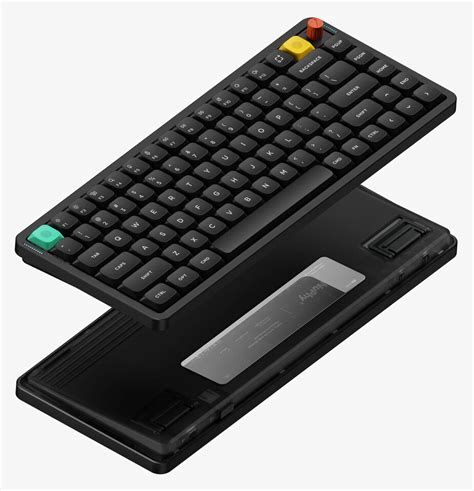
The Nuphy Air75 V3 is a compact 75% mechanical keyboard that has been a favorite among laptop users, remote workers, and compact desktop builders who want a balance between function and footprint. Beyond its visible build and the usual spec sheet—layout, switch options, wireless modes—there are subtle, underappreciated features that materially improve daily use for specific buyer groups. This article uncovers five of those hidden capabilities, explains how they help in real-world scenarios, and follows with a detailed review, pros & cons, a comparison table, a practical buying guide, and a concise conclusion.
Why these hidden features matter
Buyers typically care about typing comfort, connectivity reliability, customization, battery life, and whether a keyboard will adapt to evolving workflows. What makes the Air75 V3 stand out for many users is not just headline specs but how it integrates small conveniences that relieve friction—especially for people who travel with a laptop, switch between devices frequently, or need custom macros without tethered software. The five features below are the ones most users overlook at first glance but are worth knowing before or after purchase.
Hidden Feature 1: Multi-host pairing with fast switching
One of the most practical hidden features of the Air75 V3 is its multi-host connectivity combined with fast device switching. The keyboard supports simultaneous pairing to multiple devices—commonly two or three—over Bluetooth while also offering a dedicated low-latency 2.4GHz mode via USB dongle and a wired USB-C connection.
Real-world use case: a laptop-on-the-go user can pair the keyboard to a work laptop and a personal tablet, then switch instantly between the two with a single key combo. A remote creative who uses a laptop and a desktop at a home studio can keep both devices paired and jump between them mid-session without re-pairing.
What buyers care about: switching speed, reliability, and seamlessness. The Air75 V3’s device-switch workflow minimizes interruptions—no need to open OS Bluetooth settings repeatedly—and preserves workflow momentum when moving between calls, coding, and content creation.
Hidden Feature 2: Onboard macro and profile storage
Another often-overlooked capability is onboard profile and macro storage. While many keyboards require companion software for complex remaps and macros, the Air75 V3 can store multiple keymap layers and macro sets onboard so they persist when the keyboard moves between machines or is used without the vendor app.
Real-world use case: a software developer who uses different editor key bindings at work and home can keep separate profiles (e.g., one for VS Code shortcuts, one for terminal navigation) and toggle them with a hardware key sequence. Tournament gamers or streamers can store a low-latency gaming profile and a streaming-control profile to avoid configuring software mid-session.
What buyers care about: portability of customizations and the ability to use the keyboard’s advanced features on systems where installing third-party software is impractical (e.g., restricted corporate machines or public devices).
Hidden Feature 3: Hardware macro recording and on-the-fly layer switching
Beyond stored profiles, the Air75 V3 supports quick, on-the-fly macro recording and temporary layer activation via key combinations. Users can record a macro sequence directly on the keyboard without opening the app and assign it to an FN-layer key; this is a powerful workflow hack for quickly automating repetitive sequences.
Real-world use case: an administrative professional can record a repetitive sequence—open email, apply template, send—and bind it to a single key. Writers and researchers can create temporary macros for inserting common citations or formatting tags without leaving the editor.
What buyers care about: speed and convenience. Onboard macro recording reduces friction for users who need occasional automation but don’t want the long-term commitment of cleaning or sharing software-made macros across devices.
Discover deals on Laptops & Computers — updated daily.
Shop Amazon →Hidden Feature 4: Intelligent battery modes and fast charging behavior
Battery life is frequently a friction point for wireless keyboard users. The Air75 V3 optimizes this with intelligent power modes and behavior that extend usable runtime without sacrificing responsiveness. There is typically a high-performance mode for 2.4GHz gaming, a balanced mode for daily typing, and an ultra-power-saving mode for extended travel. In addition, the keyboard supports a fast-charge curve that gives a significant battery boost after a short charge—useful before leaving the house.
Real-world use case: a student who forgets to charge overnight can get a 40–60% usable boost from a 30-minute fast charge for a day of classes. A frequent traveler can rely on the ultra-power-saving mode while working on the plane to stretch battery across longer flights.
What buyers care about: predictable battery life and practical recovery. The Air75 V3’s modes let users choose the compromise between latency and longevity that fits their day, reducing anxiety around battery drain.
Hidden Feature 5: Acoustic tuning and foam dampening options
At first glance the Air75 V3 looks like a standard mechanical keyboard, but it often includes internal foam mounting or space for extra dampening accessories that meaningfully change typing acoustics and feel. Users can fine-tune sound and vibration by adding or removing dampening layers beneath the plate or between the PCB and case, making the keyboard quieter or fuller depending on preference.
Real-world use case: an office worker who shares a quiet workspace can install the dampening foam to reduce clack and make keystrokes less intrusive; a content creator who records videos can tune the keyboard toward a richer sound profile for ASMR-like typing clips.
What buyers care about: the tactile experience and noise profile. Acoustic tuning capabilities mean the keyboard adapts to different work environments and personal preferences, adding long-term value beyond the initial out-of-box feel.
Detailed review and analysis
Design and build quality
The Air75 V3 balances compactness and utility with a 75% layout that preserves arrow keys and a column of navigation keys while keeping a small footprint. The case typically mixes sturdy plastic with a reinforced frame; edges are finished to minimize desk wobble and the keyboard rests solidly on four feet. For buyers, this translates to a portable yet robust peripheral suitable for a laptop bag or a minimalist desk.
Typing feel and switches
Typing experience depends on the chosen switch type—linear, tactile, or clicky options are common—and the keyboard’s mounting system. The Air75 V3 tends toward a comfortable, satisfying feel that benefits from factory-stabilized larger keys and a plate or gasket mounting that softens bottom-out. The presence of dampening foam (or the ability to add it) allows fine-tuning of both sound and travel feedback.
Connectivity and latency
Multiple wireless modes plus a wired USB-C option make the Air75 V3 highly flexible. Bluetooth is ideal for multi-device workflows with moderate latency, while the 2.4GHz dongle provides a low-latency alternative for gaming or precision work. A wired connection serves power- and latency-conscious scenarios like long editing sessions or firmware updates.
Software, firmware, and customization
Nuphy’s companion app offers a user-friendly interface for per-key remapping, RGB control, and macro management. Importantly, onboard storage and hardware macro recording mean many customizations do not require the app after setup. For power users, layer-based programming and macro chains allow a single compact board to act like a full-sized workstation keyboard through clever remaps.
Battery and portability
Battery capacity combined with optimized power modes makes the keyboard suitable for days away from a desk. Fast-charge behavior is particularly helpful when schedules change unexpectedly. For frequent travelers, the keyboard’s reduced profile and the storing ability of an external 2.4GHz dongle (if provided) reduce the friction of transport.
Looking for the best Laptops & Computers deals on Amazon?
Browse Now →What it’s best for
- Remote workers who switch between a laptop and a tablet or desktop
- Writers, coders, and editors who value compactness without losing essential keys
- Gamers who need low-latency wireless and programmable layers
- Content creators and podcasters who want a tunable acoustic profile
Pros & Cons
- Pros
- Compact 75% layout keeps arrow and navigation keys without bulky size
- Robust multi-device wireless options with wired fallback
- Onboard profiles and hardware macro recording for portability
- Acoustic tuning potential via dampening foam adds customizability
- Good battery behavior with fast-charge capability
- Cons
- Advanced features require a small learning curve (key combos for macros/profiles)
- Some users may prefer a heavier metal case for desk permanence
- Out-of-the-box sound and feel might need additional dampening for optimal typing
- Power users wanting full open-source firmware may need to check compatibility
Comparison: Nuphy Air75 V3 vs. Typical 75% Keyboards
| Feature | Nuphy Air75 V3 | Typical 75% Keyboard |
|---|---|---|
| Layout | 75% (compact with arrows and nav cluster) | 75% or compact 80% variants |
| Wireless | Bluetooth multi-host + 2.4GHz + USB-C | Bluetooth or wired; 2.4GHz less common |
| Onboard storage | Multiple profiles & macros stored onboard | Varies; many models lack persistent storage |
| Macro recording | Hardware on-the-fly recording | Often software-only |
| Acoustic tuning | Factory dampening + space for mods | Varies; many have fixed internals |
| Target users | Travelers, hybrid workers, content creators | Typists, gamers, custom-build enthusiasts |
Buying Guide: How to Decide if the Air75 V3 Is Right
1. Match the keyboard to the workflow
If the primary use involves switching between devices (laptop, tablet, office desktop), look for strong multi-host Bluetooth behavior and quick switching. If gaming is a priority, prioritize 2.4GHz and low-latency wired modes. For content creators and mic-sensitive environments, acoustic tuning and travel-friendly compactness matter.
2. Choose switches that fit the day
Consider the environment: tactile or linear switches often work best in mixed-use settings. Clicky switches can be satisfying but may be disruptive in shared spaces. If unsure, start with a tactile switch option, or buy a hot-swap version to experiment later.
3. Evaluate the need for onboard customization
Onboard profile storage and hardware macro recording pay dividends when a keyboard is used across multiple systems or when installing software on every machine is impractical. If portability of customization is important, prioritize boards with persistent onboard memory.
4. Think about acoustics and modability
Some users enjoy the default sound; others prefer a quieter or deeper tone. If recording audio or sharing workspace, choose a model with interior dampening or one that can be modded easily. Check for accessible foam cavities or replaceable plates.
5. Battery and charging expectations
Look for advertised runtime in the mode that matches intended use (balanced vs. performance). Fast-charge behavior is a practical feature for last-minute top-ups. If long wireless stints are common, prioritize larger capacity and ultra power-saving modes.
6. Software and firmware considerations
Review the companion app’s capabilities and whether features require the app to be active. Users who need fully open-source firmware or QMK/VIA support should verify compatibility—some manufacturers provide that, others do not. Onboard macro recording mitigates some of these concerns.
7. Portability and accessories
Consider whether a keyboard needs to fit a laptop bag or remain on a desk. Accessories like travel cases, dongle storage, and detachable cables can change the user experience dramatically for people who commute or travel frequently.
Final thoughts and conclusion
The Nuphy Air75 V3 is more than a compact, well-built mechanical keyboard; it’s a small ecosystem of convenience features that reward users who dig past the spec sheet. Multi-host pairing with fast switching, onboard profile storage, hardware macro recording, intelligent battery modes, and acoustic tuning options are the five hidden strengths that expand the keyboard’s practical value for a range of users—travelers, hybrid workers, gamers, and creators.
For buyers, the deciding factors come down to how those subtle features align with day-to-day needs. If the priority is a compact footprint without compromise on functionality, and if long-term adaptability (switch swaps, sound mods, and portable customization) matters, the Air75 V3 is a compelling option. It’s designed to integrate into varied workflows and to be refined over time, so the keyboard often becomes more useful and personalized after a few small adjustments. In short, the hidden features described above are the levers that turn a good compact keyboard into one that feels indispensable.